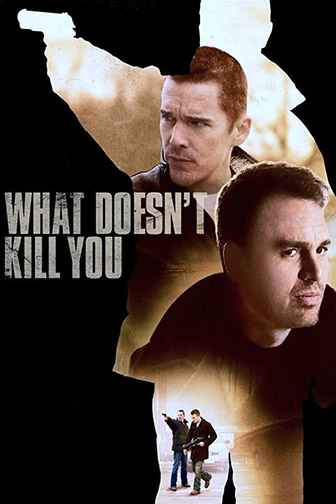
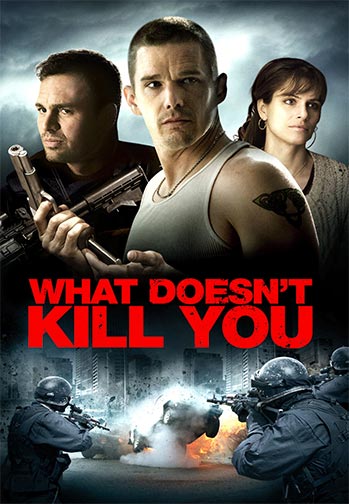
What Doesn't Kill You Movie

*** PRELIMINARY PRODUCTION NOTES ***

Running Time: 100 minutes
MPAA Rating: “R” for language, drug use, some violence and brief sexuality
Directed by Brian Goodman
Written by Brian Goodman & Donnie Wahlberg & Paul T. Murray
Starring Mark Ruffalo, Ethan Hawke, Amanda Peet, Will Lyman, Brian Goodman, and Donnie Wahlberg

Press Contact:
Stacey Leinson
310-689-1453
sleinson@yarifilmgroup.com
 ***Press materials are available at www.yfgpublicity.com***

FILMMAKERS:

Director Brian Goodman Screenwriters Brian Goodman & Donnie Wahlberg & Paul T. Murray
Producers Bob Yari Marc Frydman & Rod Lurie
Executive Producers William J. Immerman Peter McIntosh
Casting By Donna DeSeta Angela Peri
Music Supervisor Richard Glasser
Music By Alex Wurman
Costume Designer Roemehl Hawkins
Editor Robert Hoffman
Production Designer Henry Dunn
Director of Photography Chris Norr

CAST:
MARK RUFFALO Brian
ETHAN HAWKE Paulie
AMANDA PEET Stacy
WILL LYMAN Sully
BRIAN GOODMAN Pat Kelly
DONNIE WAHLBERG Detective Moran
LENNY CLARKE Hogie
ANGELA FEATHERSTONE Katie
LINDSEY MCKEON Nicole

WHAT DOESN’T KILL YOU MOVIE SYNOPSIS

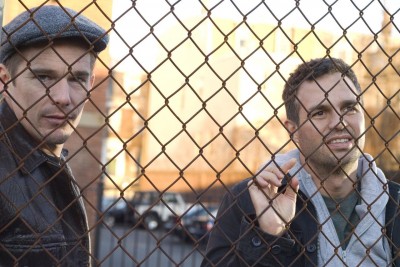
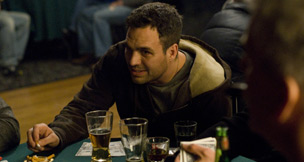
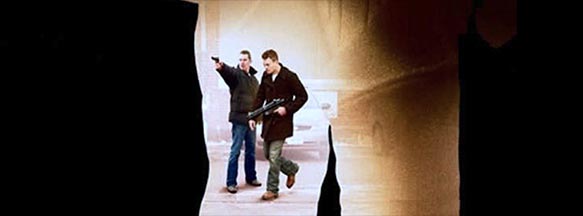
Brian and Paulie are two young punks running loose on the hard streets of South Boston. Coming from separate but equally broken homes, the boys bond of friendship makes them brothers. They do whatever it takes to survive, living by the code of their dog eat dog neighborhood. As Brian (Mark Ruffalo) and Paulie (Ethan Hawke) get older, petty crimes and misdemeanors grow into more serious offenses. Eventually, they fall under sway to the organized crime boss Pat Kelly (Brian Goodman) who runs the felonious backroom businesses and illicit trades in Southie. They also find themselves the targets of unwanted attention from Detective Moran (Donnie Wahlberg) one of Boston’s finest. And Brian in particular becomes lost in haze of drugs and rebellion. Even the love he has for his wife Stacy (Amanda Peet) and his children isn’t enough to redeem him. In time, the friends find themselves in jail – just a part of doing business on the mean streets they call home. Although not gone away forever Brian and Paulie are incarcerated long enough to learn a few lessons, but will they lead to changed lives on the outside? A storm of trouble is brewing: Paulie has big plans to liberate them from their life of crime – just one more job – one last heist – a bold and potentially violent daylight robbery. But Brian has used his time in jail to make amends to his family and get clean. When Paulie comes to him for help, Brian must face the biggest challenge to his code of honor that he could ever imagine: stand by his friend or salvage his family … he cannot do both! WHAT DOESN’T KILL YOU reveals the true life drama that writer/director Brian Goodman underwent in his struggle to honor the people he loved – on both sides of the law.

ABOUT THE "What Doesn't Kill You" Movie PRODUCTION

Real Tough Guys
Brian Goodman’s WHAT DOESN’T KILL YOU is a gritty, true-life crime drama based on his own life. “These characters are like the guys who work for Jack Nicholson in THE DEPARTED,” co-star Ethan Hawke explains. Indeed, the film follows the friendship of two men who grew up without strong parental guidance, without enough to eat, and in Goodman’s case, without a place to live in the tough-guy-dominated bars of South Boston. “It’s about becoming a man,” says Mark Ruffalo, who plays Brian in the film, “and all the ideas that people associate with what being a man is.” The film is one man’s journey from small-time crook to bigger-time crook to addiction and jail, and what that life cost him and the family he supported financially, but was never there for. For Ruffalo, the theme of what it takes to be a good parent these days is central to WHAT DOESN’T KILL YOU: “It’s about fatherhood today in America, all the weight it puts on your shoulder.” The road to success as a father was a tough one for writer-director Brian Goodman, but the struggle drove him to better his life and to get his movie made. “I considered myself a complete failure as a father at one point in my life,” Goodman notes, “but I always had a conscience. And that killed me because of the love I have for my sons. I wanted to write and make WHAT DOESN’T KILL YOU because I wanted to tell a story about a guy who wants to be a father and doesn’t know how, who wants to stop drinking and drugging, but has no idea how to do that, who wants to stop grinding out crime on the streets, but knows nothing else.” In the film, as in real life, Goodman grows up in poverty in a culture saturated by tough-guy South Boston gangster culture. In this environment, options are limited. As co-writer Donnie Wahlberg, who himself grew up in neighboring Dorchester, points out, “In the streets of South Boston, there was danger and opportunity around every corner. But the opportunities are to pretty much grow up and become a cop or a criminal.” Unsurprisingly, since it was a life of crime that enabled young Brian to stop sleeping on the streets, it was the career he pursued and the career he stuck with. Goodman married his childhood sweetheart and had two children. He did not have many options for traditional career-building with the pressing need of his family’s survival hanging in the balance of his success or failure. But as Ethan Hawke, who plays Goodman’s partner in crime, Paulie, observes, “Paulie and Brian are finding themselves getting too old for the job and need to do something with their life, but they don’t know how.” While WHAT DOESN’T KILL YOU focuses on Brian Goodman’s life and the cost of his actions, it is still a universal film about choices and how they define us as human beings in all our complexity. Ethan Hawke notes, WHAT DOESN’T KILL YOU is “an honest portrayal of how hard it is to pull yourself up by your own bootstraps in this world.”

The Real Brian Goodman
Brian Goodman knows all too well how hard that can be. He was the kid who slept on rooftops. He was the kid for whom crime seemed the only option, who married along the way and had two kids to support through a life of crime. That life of crime eventually landed him in jail, addicted to drugs and alcohol. Then Goodman got sober in 1994. He used his time in jail to participate in an acting program which led to his first audition. Eventually, he started getting jobs, mostly bit roles in big films, among them a pivotal one where he met Mark Ruffalo. It was in a movie starring Robert Redford called THE LAST CASTLE. His re-birth as an actor led him to purchase a notepad for 37 cents on which he began to scratch out the first draft of WHAT DOESN’T KILL YOU. Says Goodman, “I never dreamed—well, I did dream—but I never imagined that we would be here shooting this story I started on that notepad nine years ago.” Brian Goodman approached the making of WHAT DOESN’T KILL YOU the way he’s approached his whole life, with conviction, with determination, and with persistence, and these qualities helped attract a star-studded array of collaborators. Many who grew up in his circumstances would not have dared to have such dreams. But Goodman has clearly proved he is not a victim of circumstance. As his co-writer Donnie Wahlberg notes, “Brian had to make a lot of tough choices to survive, and the challenges that he faced sometimes overwhelmed him, but no matter how dark the times got, there was still something in him that let him hold on. Even if the string that was holding him up was thin and tearing, he still somehow found a way to hold on.” From the beginning of his friendship with Goodman, Goodman reminded Wahlberg of someone he’s very close to—himself. “I maybe didn’t venture as deep into the dark side of life as Brian, but I grew up on the same streets, the same stories. It wasn’t me that ended up in jail. It was my brothers that ended up in jail, but I had to sort of dodge the same obstacles and was faced with a lot of similar choices. That’s what really drew me into Brian and into the story.” What initially drew Mark Ruffalo into WHAT DOESN’T KILL YOU was Goodman himself. I love this guy,” says Ruffalo. “He’s a good, good man. Brian’s quiet and humble and has such a strong presence. When he talks to you, he looks you in the eyes, and is very soft spoken and real, very real.” Ruffalo’s respect for Goodman has only grown in the time they’ve known each other. “Brian has a strong moral code. It’s almost a kind of chivalry. It’s a code of ethics that is so strong – not ambiguous whatsoever. And the code is that for Brian, between family and friends, there is nothing else in the world.” Goodman has said on numerous occasions to Ruffalo, “Hey, not for nothing, but I just happened to be a little bit smarter than the rest of the guys I was running with. I don’t know why.” Ruffalo feels that “There’s an intellectual curiosity to that kid. Ever since he was a little boy, he had a thirst for something else. He wasn’t educated, but there was something in him that longed for something more. Even in the crime there was a kind of style. There’s a panache about it. Even its brutality. There was something that was always longing.” For Ethan Hawke, the decision to take the role of Paulie was very simple. “As soon as I met Brian,” Hawke enthuses, “I knew I wanted to make the movie. Brian’s super honest and he’s got a tremendous amount of energy and conviction. I thought: This guy has something to teach me.” Hawke holds Goodman in such high esteem that “every shot you worry. If you somehow feel you’ve done a bad reading or misplayed a scene that you let him down, not just for the movie, but you’ve let him down as a man because this film is so important to him. None of us want to let him down.”

Conviction Equals Chemistry Among the Cast
Goodman’s ability to inspire passion for his story has inspired an incredible amount of dedication and commitment among the cast of WHAT DOESN’T KILL YOU. In an atmosphere of such passion and commitment, the actors found themselves having the time of their lives. “I’m having a blast,” says Mark Ruffalo. “And a big part of it is because of Ethan and Brian and Amanda. I’m working with great people who really appreciate what they’re doing and love what they’re doing. It’s a gift to be able to do a movie like this where it really is just about the work and acting and the characters and the story.” Ethan Hawke agrees. “I haven’t had this much fun making a movie in a really long time. There’s something special about when a project’s personal to somebody. People aren’t here for a paycheck. Everybody is here for right this instant, right now for this moment.” Hawke feels that getting to do WHAT DOESN’T KILL YOU is a reward that he and his fellow actors are giving themselves. “We all worked hard to get to be able to play like this. Mark and I have both worked hard to get this movie made. You need some luck in your life to finance independent movies like this one that are just about people.” Amanda Peet, who plays Brian’s wife Stacy, shares in the enthusiasm of working on WHAT DOESN’T KILL YOU: “I honestly couldn’t be happier,” Peet says. Of her co-stars, she observes, “I’ve watched their work for so many years. It’s really an honor to be with them both.”

South Boston: Starring as Itself
Over the years, Goodman received several offers to make his movie, but the production would have take place outside of South Boston, where it all happened. He turned them down, knowing in his heart that there was only place this film could be made. Ethan Hawke agrees. “If we shot this movie in L.A., we could have a million people doing Boston accents and doing it up a storm, but it wouldn’t be real. It would be just terrible. The location forms the subconscious of the film. If it’s not authentic, people can smell that.” Co-writer Donnie Wahlberg says that the culture of South Boston enhances the production of WHAT DOESN’T KILL YOU, “In South Boston, people know what it takes to survive. There’s a mutual respect and an understanding that people have to do what they need to do in order to survive. If it’s a mother with six kids, she’s going to find a way to survive and take care of those kids. Even though she might have made different choices than Brian might have made, she will still have that respect.” Hawke concurs, noting that the location helps him as an actor, “It becomes infinitely easier to act because there’s our director and other people around that can help bring you into a world of authenticity.” To Ruffalo, part of what made shooting in South Boston so essential was Goodman’s connection to it. “Brian has a story connected to everywhere we go in South Boston.” And he does mean everywhere. The site of Ruffalo’s trailer was the same place that 15 years ago Goodman almost died. Goodman explained to Ruffalo, “He had a .45, and it’s a good thing. It saved my life because it was so long he couldn’t get it out in time. So I just grabbed it.” Remembering the story, Ruffalo notes, “That’s powerful. I wish everything he told us about his experiences here was in the script, but we just don’t have the time to do it. It’s amazing.” Amanda Peet appreciates Goodman’s way of “elaborating on the stories of his former life. It makes you feel so excited because he’s bringing them to life as he’s telling you these things. And then it makes whatever scene we’re working on so much more substantive because he gives everything such a great context. It’s very rich.” Co-writer Donnie Wahlberg says, “People talk about six degrees of separation, but when you’re from the neighborhoods of South Boston, it’s usually one or two.” This was certainly borne out on set, where not a day went by without people coming up to Goodman to congratulate him on his achievement, or to tell whoever would listen ‘I knew Brian when …’ or to share their memories with crew members standing out on the frozen streets of South Boston because the sets were actually where the action had taken place all those years ago – and they were too small to accommodate everyone. This dynamic reminds Wahlberg again of how much he and Goodman share in common: “I could have walked through the streets and had cops chasing me and had people throwing rocks at me and shooting bullets at me, but instead, when I walk through the streets now I get pats on the back.” The small-town feel of South Boston is apparent to Hawke, “Brian grew up in this town, and what that means in a town like this is I can’t go into a restaurant without the waiters telling me that he grew up with Brian, or the guy who owns the place telling me he was his high school teacher. He knows everybody. It’s a testament to him that everywhere I go I meet somebody that loves him.” Ruffalo has found that some of that love comes from surprising places. “I met his parole officer,” he recounts. “I saw Brian greet this guy Frank and then he called me over and said, ‘Mark, this is my first parole officer.’ The guy clearly loved him.” Later, Ruffalo met Goodman’s second parole officer. Ruffalo recalls the man telling Goodman, “I’m really happy for you, Brian. You really did good.” Ruffalo observed that Goodman commanded great amounts of respect, admiration, and love wherever they went. He attributes their response to what he himself experienced when he first met Goodman: “There’s something somewhere in this guy that everyone responds to, even his parole officer. He has a hope for greatness, and he’s made a remarkable achievement. It’s remarkable to get a movie made in Hollywood. It’s tough. And that’s why the community loves him: because he’s a guy who went out and did it. He made it.” Wahlberg is confident that Goodman won’t let the success go to his head for a number of reasons. “He’s not going to walk around and start becoming Joe director and being rude to people in this town.” Though he’s confident in Goodman’s decency, there’s another check to balance his ego should it ever threaten to get out of control: South Boston and its residents. “It’s one of the beauties of this town,” Wahlberg observes. “They’re not going to let him do it. If he tries to do it, somebody’s going to say: ‘Hey, you grew up right over here, buddy. Don’t try it.’”

The Journey to the Screen
They say that in Hollywood, getting a picture made depends heavily on who you know. WHAT DOESN’T KILL YOU is no exception to that rule. The long and interesting journey Goodman undertook to get his story to the screen begins with his friendship with Donnie Wahlberg. And fittingly enough, that story, like the man at its center, began in South Boston. Wahlberg remembers, “Family members of mine knew Brian, but Brian and I had never met. Brian got out of jail and showed up at my house one day for a little function I was having with a bunch of mutual friends. And we had an instant respect for each other.” The feeling of respect and friendship was reciprocated. Goodman recalls, “Donnie comes from a younger generation, but he was a real gentleman the day we met, and we hit it off really well.” Over the next few months, Goodman and Wahlberg kept in touch, and during that time, Wahlberg was offered the lead in a feature film shot in Boston. Wahlberg remembers Goodman joking, “Get me a job, boss.” Wahlberg, who had to go to New York for another part, did not end up getting Goodman work. When he returned to Boston, Goodman got back in touch with him to say, “Hey, boss, you know what? Never mind about getting me a part. I got my own.” Goodman’s self-sufficiency made Wahlberg’s respect for him grow, and it strengthened their friendship. Wahlberg appreciated that, “Brian’s a guy that will make his own way. He’s not too proud to ask a friend for a hand, but if a friend can’t lend him a hand, he’ll find a way.” Wahlberg reflects on this as a defining moment. “Without even being in the business, Brian had an understanding that ‘This is Donnie’s opportunity. It doesn’t mean it’s mine.’” What made this stand out for Wahlberg is his intimate knowledge of the world Goodman came from, so much like his own. Wahlberg explains, “A lot of times when you grow up in a small, tight-knit neighborhood, people instantly put their hands out. It’s not that they’re being disrespectful. It’s just on the one hand they’re happy for you, but on the other hand there’s sort of a sense of entitlement because you’re so close. It’s like, ‘Well, if he can do it, why can’t he help me do it?’ And Brian’s a guy who will survive. He did it on his own.” It was this friendship founded on mutual respect and shared backgrounds that inspired Wahlberg to agree to co-write the script that eventually got placed in Mark Ruffalo’s hands. When they met on the set of THE LAST CASTLE, Ruffalo, like Wahlberg, took an instant liking to Goodman. He remembers one of their first encounters. “Brian started telling me his story, and I was very moved and impressed by his coming from the streets and hard drugs, prison, to being there, shooting a movie starring Robert Redford.” Because he found in Ruffalo someone he very much liked and trusted, giving the script to Ruffalo on the one hand felt natural, but he was also sensitive to “not trying to corner” Ruffalo into reading it. He remembers that this was at the time Ruffalo “had some good buzz going from YOU CAN COUNT ON ME.” Goodman did tell him about WHAT DOESN’T KILL YOU, but he also made Ruffalo aware that he was sensitive to how many scripts he must be inundated with. “I told him not to bother if he didn’t have time to read it.” Ruffalo recalls this moment as well. “Brian told me, ‘Hey, man, listen, you know, I know people do this all the time to you, and, you’ve probably got a stack of scripts in your trailer right now, but I wrote this script. It’s kind of my life story.’” Goodman was right. As soon as an actor gains any measure of success, everyone they know has a script they want read. So initially Ruffalo had some reservations. “I was like, ‘Oh, Jesus,” Ruffalo recalls, adding quickly, “but I knew Brian was the real deal, so I started reading it. And usually, in cases like this, I just read a few pages, and put it down. But this script, I just blazed through it and I loved it.” Then Ruffalo sought out a trusted second opinion, “I gave it to my wife,” he says, “and she loved it.” Ruffalo was so enthusiastic about the project that he was ready to direct and take a smaller role, but production of his film IN THE CUT began earlier than expected. “That was one of the many walls we hit that set us back,” Goodman notes. Before Ruffalo became available again, Goodman had a couple of opportunities for him and Wahlberg to play the two leads. Knowing in his gut that this film had to be shot in South Boston, Goodman said no. He also encountered a few high-profile directors that he had to turn down because their vision for the project did not suit his own. “No offense to them,” he says, “but if you don’t get this world, you don’t get it.” Producer Marc Frydman concurred. “We worked on setting the movie up for seven years,” he says. “It came very close to being greenlighted but always with the condition that the shooting had to take place in Canada. Brian always rejected that possibility, knowing that the integrity and veracity of the story demanded to shoot in South Boston. Goodman was even more confident in turning the directors down when Frydman weighed in with his opinion, since “he’s been behind me and whatever I can call a career since the time I got to Hollywood.” Like everyone else involved with WHAT DOESN’T KILL YOU, Frydman instantly sparked to the script and got behind making its production a reality. With Frydman’s support, Goodman decided that he should direct the project. Once he took the helm, Goodman again reached out to Mark Ruffalo, whom he asked to play the part of himself. Ruffalo responded enthusiastically, and agreed to approach Ethan Hawke about the part of Paulie. Ruffalo recalls the night that he gave Hawke the script, “I had gone to see a play Ethan was in with our mutual friend Josh Hamilton. As I saw him work in the play, I got very excited, and thought that he would be so great for Paulie, so I called Brian and said that I was going to go backstage and talk to Ethan.” Ruffalo intended to “slip Ethan the script and get past all the agent blockade stuff,” as he puts it, adding, “because it’s hard to get a movie like this made today. It’s low budget. No one’s going to pull down a huge paycheck from it. No agent’s going to get a big commission. So they kind of block these things from happening.” Hawke recalls Ruffalo telling him, “There’s a great project with a great director. It’s a first timer but I absolutely think he’s the real deal. It’s his life story. He has the goods. I think he has a genuine sense of honesty and grasp of that world.” “I want to believe in a world where somebody can take themselves from prison and learn a few things, and write their own script and get it made, and direct it and have it turn out great,” Hawke says. “I want to believe in that world, so if you’re going to believe in it, you’ve got to help make it happen.” “Finally, we met with Bob Yari,” Frydman concludes. “He understood the project as well as the necessity to stay faithful to the original location. With Bob on board, WHAT DOESN’T KILL YOU finally had wings.”

The Scripting of a Life
More than ten years ago, Brian Goodman stood on set as an actor. He studied the script he was holding, and thought, “Maybe I could do that. So I started with interior, South Boston, and just started writing.” Reflecting upon his experience as a first-time screenwriter, Goodman says, “I think eighty-five percent of us walking the face of the earth have some type of story in their life that could be a movie. But to put it together from A to Z in a screenplay of only a hundred and ten pages…it’s almost impossible.” Goodman, who does not know how to type, much less handle a screenwriting software program like Final Draft, wrote his life story on that cheap notepad he purchased at an Osco drugstore. When he completed the initial draft, he brought it to long-time friend and fellow Boston native Donnie Wahlberg, who was a bit taken aback. “When Brian came to me and asked me to read his script, knowing his history made me interested in hearing his story, but also knowing his history made me kind of say: How did this guy write a script? He was in jail six months ago.” Wahlberg describes the unique condition of WHAT DOESN’T KILL YOU’s first draft: “The script was sort of mismatched paper. There were even a couple of napkins thrown in, but it was a collection of great stories that he had of his journey.” Despite the script’s unconventional appearance, Wahlberg felt a real connection to the story. “I thought it was a story that should be told,” he says. The two decided to collaborate. Wahlberg says, “We went from napkins to script paper. Neither one of us could type on the computer or work Final Draft or anything, but we started hacking out ideas.” Enter another South Bostonian, screenwriter Paul T. Murray, who has the honor of being the first South Boston resident to make it out of the old neighborhood into Hollywood. Goodman describes the collaboration: “Donnie was good at crossing T’s and dotting I’s, and Paul was good at the structure. It was asking a lot from a screenwriter who’s had a few movies made to take that on this job, but in the end we came up with what I believe is a good screenplay.”

Goodman’s Freshman Effort at the Helm
For a first-time director, the cast is in agreement that Goodman has outdone himself. Ethan Hawke reflects on what’s so enjoyable about being directed by Goodman, “I enjoy the hell out of it because this is not a job to Brian. This is part of his life. It’s his life’s work, and that’s contagious. It’s wonderful to be a part of that. If this script was being directed by some young guy at a film school who like had some jazzy ideas of some shots, it wouldn’t be interesting to me.” That Goodman is the writer as well as the director has also been very helpful to Hawke, who says, “It’s a huge advantage in this scenario. I mean, it’s like, acting in TO KILL A MOCKINGBIRD and having Harper Lee there, and you can say: ‘Well, what actually happened when he ordered the beer?’” Mark Ruffalo agrees. “I mean, the great thing is I got the guy there. Any time that I don’t feel like I know what I’m doing as the character of Brian Goodman, I just go over and talk to the real Brian Goodman. I ask him what’s going on here? What were you feeling? And I can also just draw from his physical being and how he talks. He’s such a great character himself.” In addition to being a tremendous resource to the cast as a primary source of information about the script, the actors praise his directing style. Amanda Peet says that “Brian’s wonderful to work with. He is very generous and he doesn’t have a huge ego. There are a lot of people who require you to stick exactly to the lines and exactly to their vision, but Brian has a lot of faith in us. We’re let loose, and it’s quite exciting.” While he gives his actors their freedom, he is also quick to rein them in when they misstep. Hawke recounts a scene where he tousled Ruffalo’s hair. “Brian says to me, ‘Cut, cut, no. Paulie would never do that. He’s not 13 years old.” Hawke told Goodman that he thought the hair-tousling idea was a funny addition, to which Goodman said, “It is funny. But it’s not right.” This attention to specific detail impresses Hawke. “Brian can smell when something feels fake. The level of detail he pays attention to as a director is very precise.” Ruffalo had a similar experience with Goodman when he was shooting the pivotal scene with Hawke’s Paulie at the end of the movie. “The actor’s first inclination is that it’s traumatic, it’s sad, it’s almost sentimental, in a way. That would be most actors’ first choice about it. My instinct was that it should be this emotional goodbye. Brian stepped in and said ‘It’s lighter than that. It’s just more matter-of-fact.’ It’s a simple thing, but it works so much better the way he sees it.” Ruffalo also credits Goodman’s acting ability with contributing to his effectiveness as a director. “Brian’s a great actor, so I will even ask him how to say certain lines. If you had someone who didn’t know about acting as much as he does and who didn’t love actors as much as he does, and who didn’t love the process of acting as much as he does, this could be a nightmare job because somebody who’s doing a story about their life and then directing that story, they have very specific ideas about the way that story should be.” Ruffalo rates Goodman’s performance as a director as “better than many veteran directors” he’s worked with. “He’s doing amazing, “ Ruffalo enthuses. “The guy’s got just an unbelievable eye for honesty, for truth, and he’s also a great leader.” Ruffalo expands on Goodman’s leadership: “Brian has confidence and he knows how to engender confidence in his actors. And he knows how to engender a team feeling. He’s very protective, and he knows the process an actor goes through, so he creates a lot of good space around us in which to do that. In my experience, there are not a lot of directors that I’ve come across who really understand those things. He hit it naturally. I have been blown away by his leadership.”


ABOUT THE "What Doesn't Kill You" Movie FILMMAKERS
BRIAN GOODMAN (Director/Writer) – After hitting the streets at age 12, Brian Goodman did whatever he could to survive as one of South Boston’s homeless. An altercation landed him in prison from 1989-1994. He was twice paroled, both of which he violated. One thing that kept him going, was the idea he could be an actor. At age 8, he saw the TV movie, BRIAN’S SONG, and just knew this was something he could do. While in prison, watching a lot of television and movies, he commented to a fellow prisoner, “I’m going to be an actor someday.” After serving his time, he heard about a casting call for a film being shot in Boston. He went in for an audition and was given his first role in SOUTHIE, a drama about a gang in South Boston, starring Donnie Wahlberg. Parole regulations stipulated he could not leave the state of Massachusetts, so he took it as a divine sign when his next two auditions turned out to be in Boston and garnered him speaking roles in the feature films, SNITCH, (a.k.a. MONUMENT AVENUE), directed by the late Ted Demme and IN DREAMS helmed by Neil Jordan. “Not bad for a kid from the streets to nail his first 3 auditions,” said Goodman. After completing the terms of his parole, Goodman moved to Los Angeles in 1998 and pursued his acting career, initially playing a lot of golf and gambling. Eventually his fortunes turned and he landed the role of a “suit and tie business-type guy” who kidnaped Jeff Bridges’s character in the film SCENES OF THE CRIME. He served as technical advisor on the picture. This brought him to the attention of producer Rod Lurie who championed him for a role in his prison drama, THE LAST CASTLE, starring Robert Redford. Goodman’s prison experience came into play once again, through his portrayal of the character, ‘Beaupre’ in the feature film. He is once again working with Rod Lurie, creator of LINE OF FIRE. Goodman also appeared in Steven Spielberg’s CATCH ME IF YOU CAN. His audition for Spielberg to portray Leonardo DiCaprio’s character’s father (which eventually went to Christopher Walken), was a memorable one. “It was just me and him and a camcorder in a room. He called me two weeks after production began and said, you know I want you in the movie somewhere. I did a scene as a motel clerk with Tom Hanks. It was fun,” he said. His other features include BLOW, (re-teaming with director Ted Demme in his final film), MUNICH, ANNAPOLIS, THE FAST AND THE FURIOUS: TOKYO DRIFT, THE BLACK ROSE, JUST ONE NIGHT and the short film, ORPHAN. His television credits include appearances on BOOMTOWN, 24, THE CLOSER, LOST, CSI and THIEVES. Goodman’s favorite role is that of being a dad to his sons, Mark, 15 and Brian, 21. He works out and enjoys a variety of sports as participant and viewer: tennis, basketball, golf, softball and ice hockey. He resides in Los Angeles.

PAUL T. MURRAY (Writer) – An edgy, volatile, talented, and very funny Irish bundle of dynamite, Paul T. Murray grew up in legendary Southie abiding by the Irish Claddagh Ring adage of Love, Loyalty and Friendship. Upon making his bones in Stand-Up Comedy he transplanted to L.A. becoming a successful actor-writer-producer-director. Along with extensive Film, TV and Theatre credits, Murray is a prolific writer having penned scores of scripts. 16 have been produced thus far, including CRUEL WORLD, starring Edward Furlong & Jaime Pressly and the critically acclaimed, VERY MEAN MEN, in which he also starred with Matthew Modine, Ben Gazzara, Charles Durning, Burt Young and Academy Award® winners Martin Landau & Louise Fletcher. Variety raves, “The funniest crime caper to come down the pike since LOCK, STOCK AND TWO SMOKING BARRELS.” Upcoming features include BOILER MAKER, which he also directed, starring John Savage, Arie Verveen & Jack McGee.
DONNIE WAHLBERG (Writer) – See “About the Cast”

MARC FRYDMAN (Producer) – Marc Frydman began his career as part of the founding team that created the French pay TV channel Canal +, where he eventually became the Vice President of Feature Film Co-productions. In 1992, when Canal + created Hexagon Films, Frydman became Hexagon’s President of Film Production. After Hexagon, Frydman moved on to form Battle Plan Productions with his producing partner, writer-director Rod Lurie. In addition to WHAT DOESN’T KILL YOU, Frydman’s feature credits as producer include Rod Lurie’s NOTHING BUT THE TRUTH starring Kate Beckinsale, Alan Alda, Matt Dillon, David Schwimmer, Vera Farmiga, Noah Wyle, and Angela Bassett, Lurie’s RESURRECTING THE CHAMP starring Samuel L. Jackson and Josh Hartnett, Tony Bill’s FLYBOYS starring Jean Reno and James Franco, alongside producers Steven Soderbergh and George Clooney for John Maybury’s THE JACKET starring Adrien Brody and Kiera Knightley, Lurie’s short film, an Official Selection of the 2003 Sundance Film Festival, THE NAZI starring James Cromwell and Maura Tierney, Dominique Forma’s SCENES OF THE CRIME starring Jeff Bridges, Lurie’s Academy Award® and Golden Globe nominated THE CONTENDER starring Gary Oldman, Joan Allen, Jeff Bridges and Christian Slater, DETERRENCE starring Kevin Pollack and Timothy Hutton, Mike Binder’s THE SEX MONSTER starring Mariel Hemingway and Mike Binder, 1997 Official Cannes Film Festival Selection Gary Oldman’s NIL BY MOUTH starring Oldman, Mark Rocco’s MURDER IN THE FIRST starring Christian Slater, Kevin Bacon and Gary Oldman, with Dean Devlin for Roland Emmerich’s STARGATE starring Kurt Russell and James Spader and James B. Harris’ BOILING POINT starring Wesley Snipes and Dennis Hopper. In television, Frydman and his partner Lurie recently executive produced the drama COMMANDER IN CHIEF for Touchstone Television and ABC as part of an overall multi-year deal between the studio and their company, Battle Plan Productions. In 2006, the show’s star, Geena Davis, was awarded the Golden Globe for Best Performance by an Actress in a Television Series. In 2002 Frydman executive produced Lurie’s one hour television drama pilot, LINE OF FIRE, in conjunction with ABC, Touchstone, and DreamWorks. The series was given a thirteen episode commitment and aired on ABC in the fall of 2003, making Frydman the first French executive producer of a major network television series. The drama series was called the “best new show of the year” by the Associated Press and the Miami Herald. Currently Marc is producing the feature remake of STRAW DOGS for Sony Screen Gems, with Rod Lurie attached to write and direct.

BOB YARI (Producer) – Bob Yari is the founder of Yari Film Group, one of Hollywood’s fastest growing independent studios with an annual production and release budget of over $300 million and a yearly slate of 10-15 films. In addition to his work with YFG, Yari also produces films as an individual producer. Bob Yari began his career in Hollywood after receiving a degree for Motion Picture in Cinematography.  After working for several years as a Producer and Director, Yari concentrated his efforts in the real estate industry.  His real estate ventures have included syndication, construction, and development of office towers, malls and residential complexes. Yari also is an owner and board member of the Mexmil Companies, an aerospace manufacturing group with over 1,000 employees worldwide. Yari has produced over 35 features including CRASH, which won the Oscar® for Best Picture. He also produced THE ILLUSIONIST, which was one of the top grossing independent films of 2006. Yari Film Group’s upcoming titles include: ACCIDENTAL HUSBAND with Uma Thurman, KILLING PABLO, the story of the life and death of Cocaine Kingpin Pablo Escobar and ASSASSINATION OF A HIGH SCHOOL PRESIDENT, a High School Film-Noir with Bruce Willis.

PETER R. MCINTOSH (Executive Producer) – Peter R. McIntosh is a New York based film and Television Producer. Born in NYC, he studied at New York University, receiving a Bachelor of Fine Arts Degree from Tisch School of the Arts. McIntosh began his career as a film production assistant on feature films shooting in New York. He soon moved into production management, and his first producing assignment was for the Rolling Stones Music video, TATTOO YOU. On this project he worked with Executive Producer Lorne Michael. He went on to produce his first television series in 1986 for Executive Producer Michael Mann. The series, CRIME STORY, was a period crime saga on NBC that was nominated for two Emmy awards, winning one. The series was listed as one of the 10 best television shows of the decade by Time Magazine. McIntosh continued his relationship with Michael Mann, working with him on his film, MANHUNTER. For the following three years, McIntosh produced a series of projects with best selling author Stephen King. Working together with the acclaimed novelist on his first television adaptation, GOLDEN YEARS, McIntosh continued the collaboration on the television mini-series on the author's most popular novel, THE STAND. The show earned four Emmy nominations, winning two. Following that, McIntosh worked with Mr. King on the Michael Jackson short film, IS THIS SCARY? Returning to film, McIntosh was associated with Director John Badman at Universal Studios on the film, THE HARD WAY starring Michael J Fox, and BIRD ON A WIRE with Mel Gibson and Goldie Hawn. He was also the N.Y. Production Manager of HOME ALONE 2. After a four year association with Executive Producer Dick Wolf, during which he produced; NEW YORK UNDERCOVER, FEDS, SWIFT JUSTICE, WRIGHT VERDICTS and PLAYERS, McIntosh produced the series WONDERLAND for Executive Producers Ron Howard and Peter Berg. Working with Novelist Anne Rice, Peter produced the best-selling author's FEAST OF ALL SAINTS for ABC Television. The four-hour mini-series received three Emmy nominations. Recently McIntosh produced the CBS Network show CRIMINAL MINDS, and the film HARD LUCK, starting Wesley Snipes and Cybil Sheppard. McIntosh recently finished and delivered the Touchstone\DreamWorks Television pilot, I’M PAIGE WILSON for the CW Network. He is currently associated with, and preparing the filming of an adaptation of Oscar Wilde’s play A WOMAN OF NO INFLUENCE starring Annette Benning and Sienna Miller. The film will be directed by Bruce Beresford. Peter is also Producing the adaptation of Stephen King’s novel BAG OF BONES, with Academy Award® winning Writer/ Director Guillermo Del Toro. In non-film related experience, McIntosh was engaged by Morgan-Stanley in New York in 2001 as a Financial Advisor and Account Representative. He became involved with survivors and family members who suffered losses in the World Trade Center attacks, and was instrumental in setting up their investment portfolios. As a result of those relationships, he became a Member of the Board of Trustees of September’s Mission, a non-profit family support foundation adding victims of the 911 attacks. McIntosh has lectured on the business of producing television programs at New York University and at the University of Utah in Salt Lake City and the Rhode Island School of Design.

CHRISTOPHER NORR (Director of Photography) – For more than twenty years and over half of his lifetime, Christopher Norr has been working behind the camera. His early experiences as a camera assistant landed him alongside directing greats like Woody Allen, Rob Reiner, Sydney Pollack, Ron Howard, and Oliver Stone but it wasn‘t long before he aspired to be a cinematographer and shot numerous independent feature films and dozens of commercials and music videos for directors such as Spike Lee and Arthur Elgort. His camera experience encompasses collaborations with director Michel Gondry on the visually experimental films ETERNAL SUNSHINE OF THE SPOTLESS MIND, DAVE CHAPPELL’S BLOCK PARTY, and BE KIND REWIND and serving as cinematographer on numerous features including Ethan Hawke's THE HOTTEST STATE, Spike Lee’s WE WUZ ROBBED, Michael Phelan’s INTO THE FIRE, Alex Steyermark's ONE LAST THING, and Eric Weber's SECOND BEST. Next feature up for Norr is James DeMonaco's STATEN ISLAND produced by Luc Besson.

HENRY DUNN (Production Designer) – Henry Dunn’s work includes Art Directing the pilot of MAD MEN, THE SOPRANOS (The last 22 Episodes), RESCUE ME and three years of THIRD WATCH. Dunn designed the moveable set for the Showtime version of THIS AMERICAN LIFE. Films designed include GARMENTO, ORDINARY SINNERS, THINGS TERRESTRIAL, THE SIMIAN LINE (Palm Springs Film Festival 1/00), MARRIAGE MATERIAL (Lifetime fall ‘99) and the series SLEDGEHAMMER for VH-1. As Art Director, features include JUST THE TICKET, SERVICING SARA and COYOTE UGLY. Theater designs include A THOUSAND CLOWNS on Broadway and THE PRINCIPALITY OF SORROWS, on which Ethan Hawke served as a producers.

ROEMEHL HAWKINS (Costume Designer) – Roemehl Hawkins began her Costume Design career in July 2004. She worked on a television show that no one had yet heard of; that show was DESPERATE HOUSEWIVES. Hawkins became the Assistant Costume Designer on DESPERATE HOUSEWIVES, and at the height of the show's success, she decided to trade in the five Housewives for five Hollywood Jet-Setters; she joined the HBO hit series ENTOURAGE as the Assistant Costume Designer. Hawkins completed two full seasons of ENTOURAGE, and while on hiatus, she decided to go out on her own and became a Costume Designer on ABC's CAVEMEN. Hawkins is proud to announce that WHAT DOESN’T KILL YOU is her first feature film as a Costume Designer. Yari Film Group Presents

A Bob Yari Productions/ Battleplan Production
A Film by Brian Goodman
Mark Ruffalo
Ethan Hawke
Amanda Peet
WHAT DOESN’T KILL YOU
Will Lyman
Brian Goodman
And Donnie Wahlberg
Lenny Clarke Angela Featherstone Lindsey McKeon
Casting by Donna DeSeta Angela Peri
Music Supervisor Richard Glasser
Music By Alex Wurman
Costume Designer Roemehl Hawkins
Editor Robert Hoffman
Production Designer Henry Dunn
Director of Photography Christopher Norr
Executive Producers William J. Immerman Peter McIntosh
Produced by Bob Yari Marc Frydman & Rod Lurie
Written by Brian Goodman & Donnie Wahlberg & Paul T. Murray
Directed by Brian Goodman

What Doesn't Kill You Movie

New movie opening in December


Visit Yari Film Group


What doesn't kill you movie -Yari Film Group Releasing


Movie Photos        Movie Synopsis       Movie Actors      Movie Home


Search Engine Marketing by Adtastic Hosting/Web-Sem